George Washington's IQ: 140
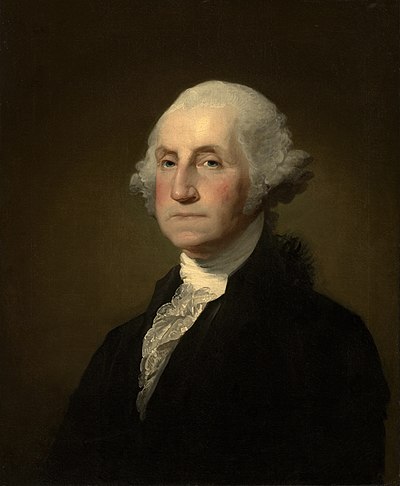
Estimated IQ
140
Known For
First US President, revolutionary general, Founding Father
About George Washington
George Washington was the commander of the Continental Army during the American Revolutionary War and the first President of the United States, serving two terms from 1789 to 1797. He had limited formal education — largely self-taught after his father died when Washington was eleven — but developed exceptional practical intelligence, organizational ability, and political judgment across a career that spanned military command, plantation management, constitutional founding, and presidential leadership. His estimated IQ of 140 reflects the cognitive demands of his achievements: sustaining a revolutionary army against the world's most powerful military for eight years through a combination of tactical ingenuity and political skill, then designing the institutional framework of a new republic with extraordinary durability.
What an IQ of 140 Means
Washington's estimated IQ of 140 reflects practical and political intelligence rather than the abstract mathematical reasoning that characterizes many high-IQ historical figures. His greatest cognitive achievement may have been recognizing what not to do: refusing to be crowned king when offered the opportunity, voluntarily surrendering power after two terms when he could have continued indefinitely, and understanding that the precedents he set as first president would shape the republic's development for generations. This capacity for self-restraint and institutional thinking — placing the long-term health of the institution above short-term personal advantage — is a form of cognitive and moral sophistication that IQ tests do not measure.
How George Washington Compares
To understand where this falls on the IQ scale, see our complete IQ score ranges guide, or learn what IQ actually measures.
Famous IQ Comparison
| Person | Estimated IQ | Known For |
|---|---|---|
| George Washington | 140 | First US President, revolutionary general, Founding Father |
| Thomas Jefferson | 145–160 | US Founding Father, Declaration of Independence author, third President |
| Nassim Taleb | 145–155 | Author of The Black Swan, statistician, derivatives trader |
| Arnold Schwarzenegger | 135 | Bodybuilder, action movie star, California governor |
| Tony Robbins | 130 | Life coach, motivational speaker, author, entrepreneur |
| Matt Damon | 135 | Good Will Hunting co-writer, Harvard attendee, Oscar-winning actor |
| Reed Hastings | 155 | Netflix co-founder and CEO, education reform advocate |
See the complete famous IQ list or check what an IQ of 140 means.
Careers That Match an IQ of 140
- Surgeon — typical IQ range: 120–135
- Scientist — typical IQ range: 120–135
- Mathematician — typical IQ range: 130–145
Explore the full IQ by career chart.
Where This Estimate Comes From
- Cox (1926) historiometric study of eminent historical figures
- Documented record as surveyor, general, and first US president with limited formal schooling
- Never tested; predates modern IQ testing
Estimate disclaimer: George Washington's IQ figure is a speculative estimate compiled from public sources, not a verified test result. See how we compile these estimates.
Frequently Asked Questions
What was George Washington's IQ?
George Washington's IQ is estimated at approximately 140, placing him in the top 0.4% of the population. This is necessarily a speculative posthumous estimate for an eighteenth-century figure who had limited formal education. The estimate reflects the cognitive demands of his achievements: commanding a revolutionary army against the world's most powerful military, navigating the political complexities of the Constitutional Convention, and establishing the institutional norms of the American presidency through the precedents he consciously set.
How did Washington sustain the Continental Army through years of defeats?
Washington's military strategy was fundamentally Fabian — avoiding decisive battles where the Continental Army's weaknesses would be exposed, preserving the army as a fighting force, and waiting for opportunities when British overextension created tactical advantage. His victories at Trenton and Princeton were model examples of strategic surprise, but more important than any single battle was his capacity to maintain the army's cohesion through the hardships of Valley Forge and repeated retreats. He managed the politics of the officer corps, the Continental Congress, and foreign allies simultaneously — a leadership challenge requiring exceptional interpersonal and political intelligence.
Why was Washington's voluntary surrender of power historically significant?
When Washington resigned his military commission in 1783 and later refused a third presidential term in 1797, he established precedents of voluntary power transfer that were genuinely unusual in world history. King George III reportedly said that if Washington truly resigned his military command, 'he will be the greatest man in the world' — reflecting how extraordinary voluntary power surrender was by the standards of the time. The two-term presidential precedent he established became conventional practice for 150 years until Franklin Roosevelt broke it in 1940, and was subsequently codified in the 22nd Amendment (1951). Political theorists argue that Washington's precedents were as constitutionally significant as the written document itself.
More Historical Figures Figures
Explore More Famous IQs
Take our free IQ test to discover your own score, or explore what an IQ of 140 means.
MyIQScores Editorial Team
Researchers in cognitive psychology, psychometrics & educational science
Last updated
May 10, 2026
All content on MyIQScores is reviewed for scientific accuracy against peer-reviewed research in cognitive psychology and psychometrics. Our editorial team cross-references each article with published literature before publication and updates pages whenever new research warrants a revision.